Is Attached-Pad Vinyl Flooring Enough for Sound Control?
No. An attached pad does not automatically establish that a floor meets a condo’s or other building’s acoustic requirements. The evidence is the performance of the complete floor-ceiling assembly, documented under appropriate test conditions.
To see why the layers deserve a closer look, watch what happens when a golf ball is dropped onto two different LVP assemblies.
Attached-pad LVP vs. LVP over DuraPad 2 mm
A golf ball rebounds differently on two LVP assemblies. This visual demonstration illustrates impact response.
|
Demonstration assembly |
Flooring and underlayment | Observed rebound |
| A: Factory-attached pad | LVP with its attached backing. No separate acoustic underlayment. | Higher |
| B: Separate membrane | LVP without an attached pad over DuraPad 2mm. | Lower |
What does the bounce test show?
The golf ball bounced significantly higher on the LVP with an attached pad. With DuraPad 2 mm, the ball bounced much less, demonstrating that the DuraPad flooring system performed better at reducing rebound and returning less impact energy to the ball. This highlights the benefits of a separate, purpose-designed acoustic underlayment,
What does an attached pad do?
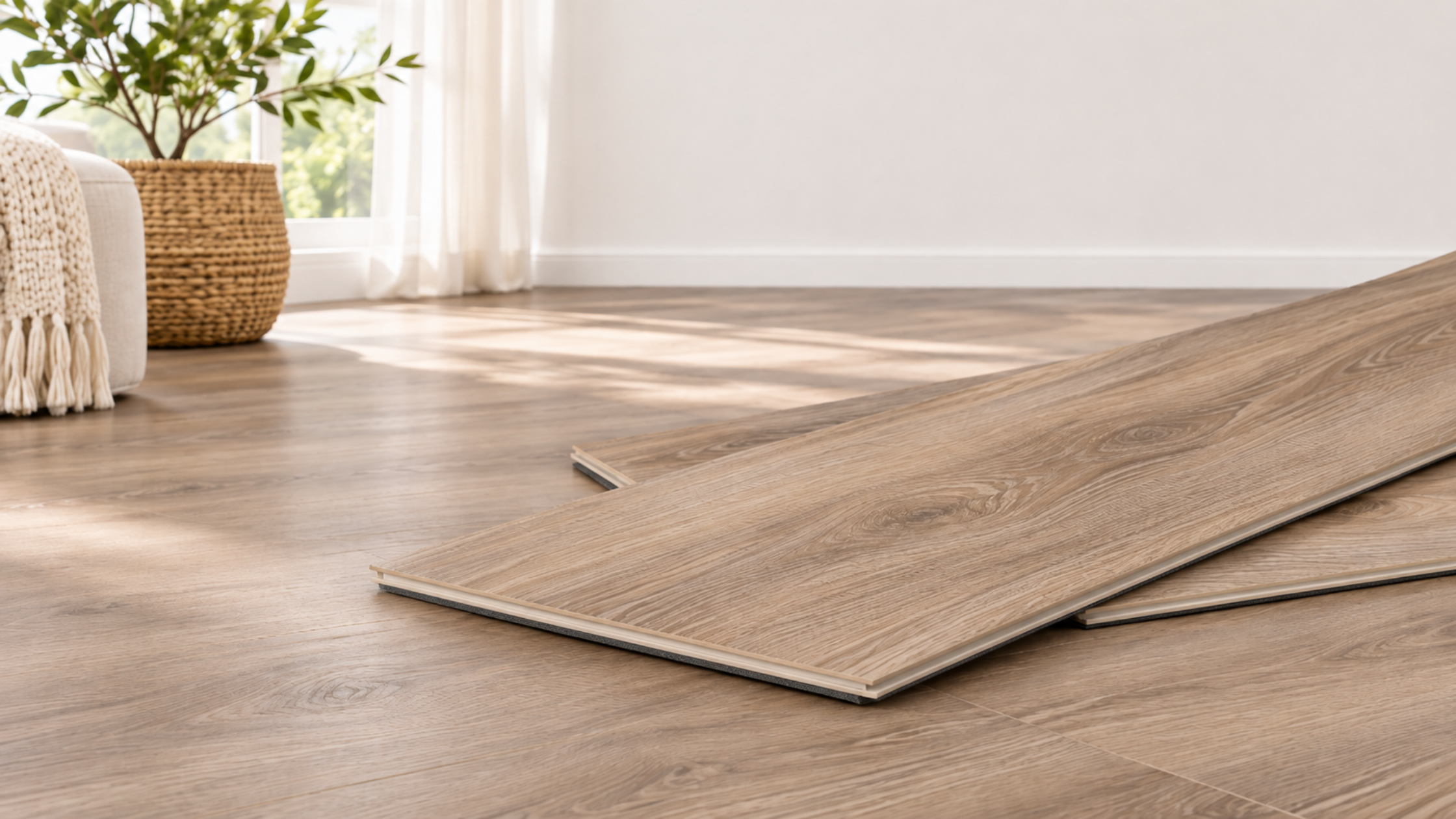
An attached pad is a backing bonded to the vinyl plank at the factory. It provides minimal cushioning and acoustic performance.
Common backing materials include cross-linked polyethylene foam, known as IXPE, ethylene-vinyl acetate, or EVA, and cork.
Is an attached pad enough for a condo or apartment?
No. A purpose-designed membrane is worth considering when acoustic documentation is important and a compatible assembly is available. DuraPad 2mm and Duraquiet 3mm are high-performance recycled rubber acoustic underlayments designed for luxury vinyl plank floors.
Impact sound travels through a system that includes the finished floor, any resilient layer, the structural subfloor and the ceiling below. A laboratory result obtained with one slab and ceiling cannot automatically be applied to a different building. The Dura Flooring Approval Kit lists various floor assemblies with corresponding IIC & STC results along with an editable board letter to help prepare your condo or strata flooring submission.
Can you add underlayment beneath LVP with an attached pad?
Only when the flooring manufacturer permits the complete combination. Do not assume that stacking two cushioning layers improves the installation or its acoustics. Excessive movement can put stress on click-lock joints and potentially void the flooring manufacturer's warranty.
For a new project where a separate membrane is desired for enhanced acoustics, a practical alternative is compatible LVP without an attached pad over an approved standalone acoustic underlayment.
How should you compare acoustic reports?
Start with the building’s requirement and ask for the full test report, not just a headline number. Check the finished flooring, underlayment, subfloor or slab, ceiling, installation method and any additional layers against the proposed construction. Dura's technical team is available to review your floor plans and help you reach your acoustical rating targets.
Frequently Asked Questions
Does LVP with an attached pad reduce noise?
LVP with an attached pad may provide minimal noise reduction, but that doesn't necessarily mean it delivers adequate sound isolation. Acoustic performance depends on the entire floor-ceiling assembly, not just the attached pad.
Before trusting any advertised acoustical rating, request an independent, third-party laboratory test report that clearly identifies the complete tested assembly. If an acoustic rating cannot be verified through credible test data, it should not be relied upon. For verified acoustic performance data, explore Dura's Architect Portal, featuring over 80 acoustical test reports to help architects, specifiers, and flooring professionals evaluate and compare floor assemblies.
Is a separate underlayment always better than an attached pad?
Yes, Dura underlayments have demonstrated superior acoustic performance compared with attached pads under equivalent testing conditions.
What is the best acoustic underlayment for LVP and LVT?
DuraPad 2mm and Duraquiet 3mm are two excellent acoustic underlayment options for luxury vinyl plank and luxury vinyl tile flooring. Both are designed to help reduce impact sound transmission in compatible flooring assemblies.
Choose the assembly, not the claim
The golf ball drop demonstration makes one point visible: two LVP assemblies can respond differently to the same type of impact. To determine how an assembly controls sound, go beyond the bounce and examine the appropriate acoustic evidence.
Contact Dura for help reviewing a compatible flooring assembly and its supporting documentation.